[woocs sd=1]


How I Track Tokens on Solana (and Why I Keep Coming Back to Solscan)

Whoa!
I started poking around Solana explorers a few years back. They were clunky then, and honestly kind of wild. My first impression was messy, though that changed fast as I spent more time with on-chain data and real trades, because the tools matured and my needs evolved into something more precise and slightly obsessive.
Seriously?
Yes — tracking token flows feels like detective work sometimes, and the right explorer makes the case clear. For me, a token tracker is only as useful as its ability to show provenance, liquidity, and suspicious movements without making me jump through hoops.
Here’s the thing.
Solscan rose to the top of my rotation because it balances speed with depth. The UI gives quick answers and deeper dives when I need them, which matters when markets move fast and you need context, not just raw numbers. Also, the search and filter tools save time in a way that feels almost small but ends up being very very important.
Hmm…
Initially I thought all explorers were interchangeable, but then I realized that indexing choices and UX decisions change what you notice on-chain, and those subtle differences influence trading and investigation outcomes. On one hand you get a nice summary, though actually digging into token transfers, inner instructions, and block-level context can reveal patterns that a superficial view misses.
Really?
Absolutely — though it’s not perfect. I still see issues with some contract labeling and with new token mints that lack metadata, so you have to be careful. My instinct said trust but verify, and that mantra has saved me from a couple of rug pulls and badly timed bids.
Whoa!
When I scan a token I look for volume history, holder concentration, mint authority activity, and recent whale moves. Those four signals together often tell you more about intent than a flashy token page ever will, because coordinated selling or concentrated ownership usually precedes fast dumps, and sometimes you can spot the pattern before price reacts.
Okay, check this.
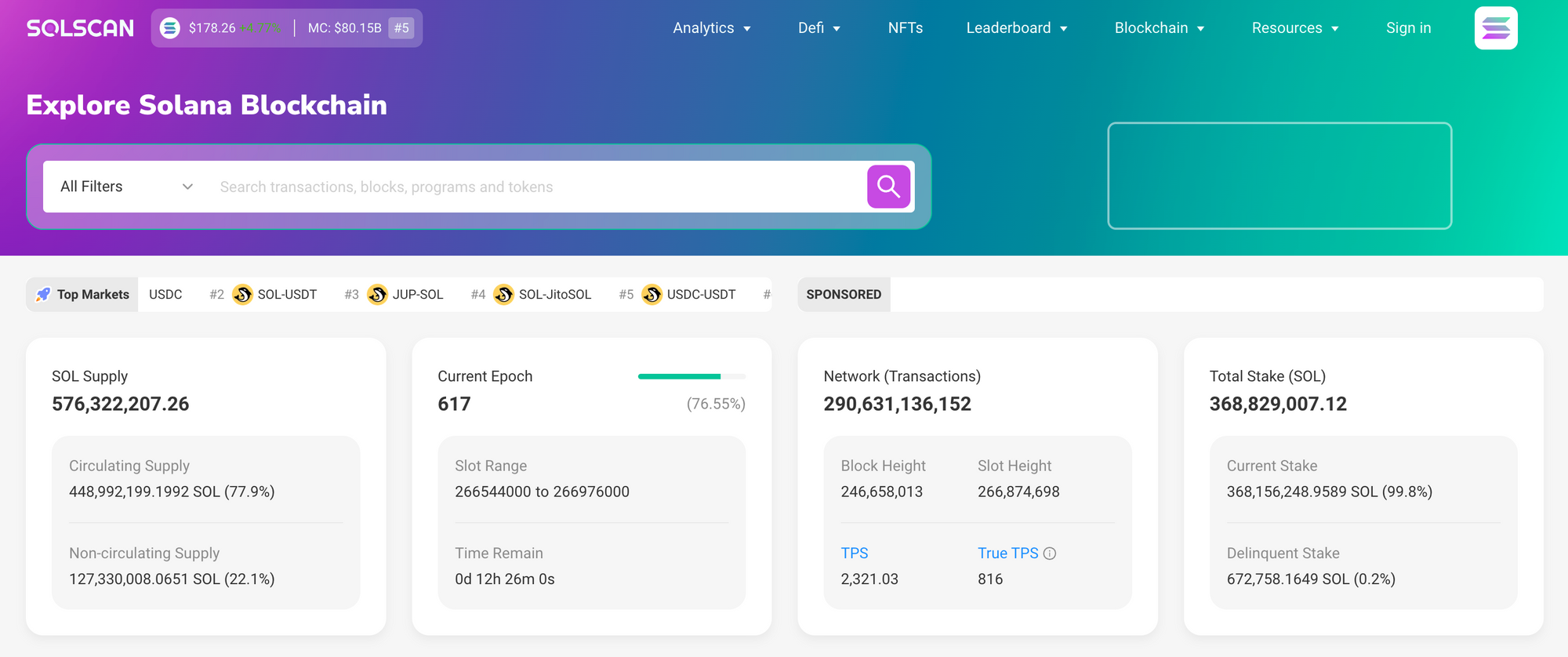
Solscan’s token tracker surfaces holder lists and transfer histories in ways that make sense to me, with CSV export and clear timestamps. The token page links to token swaps and associated markets, which helps when I’m trying to correlate on-chain activity to DEX liquidity events. I like that it shows inner instructions and parsed program calls, because somethin’ weird in the instruction set will often explain price action that otherwise looks random.
I’ll be honest.
I’m biased, but I prefer explorers that let me stay in flow without toggling through five pages; that kind of friction kills momentum in a trade or an investigation. (oh, and by the way…) If you’re used to block explorers on other chains, expect some Solana-specific quirks, like different program IDs and SPL token conventions, which are easy to miss at first.
Where to go next — a practical nudge
Check the token’s recent transfer clusters, scan holder percentage, look at mint authority moves, and cross-reference swaps on DEXes via a reliable explorer like solscan explorer official site when you need a single source that mixes speed with detail.
Whoa!
That link is the one I click a lot, especially from a coffee shop crash course when I want to show someone on a laptop. Sometimes I verbally annotate as I go, saying “see that spike?” which helps newcomers understand on-chain cause and effect. My offline habit of sketching timelines with pen and coffee stains still helps me parse complex movements.
Seriously?
Yep — you should care about metadata and token registry entries, because projects that register their metadata tend to be more credible. But metadata alone isn’t proof; it’s context. On one hand, good metadata reduces friction for wallets and marketplaces, though actually verifying the underlying transactions and accounts is where trust gets built or shredded.
Here’s the thing.
As you get deeper, you’ll want to learn program IDs for common tools like Serum, Raydium, and token-issuance programs, since recognizing patterns from those programs speeds your analysis and reduces false positives when hunting suspicious behavior. Learning those patterns feels like learning a neighborhood — after awhile you know where the sketchy spots typically are.
Hmm…
For token discovery, watch new mints with scrutiny and monitor initial liquidity adds closely. Often the first liquidity provider or the first few big holders reveal more about intention than a project’s roadmap does. I’m not 100% sure about any single signal alone, but together they form a story that you can act on or investigate further.
Okay, check this.
One practical workflow I use is: open token page, export holder CSV, map top holders, then watch recent transfers for clustering, and finally correlate that with on-chain swap events; that gives a quick risk assessment and informs whether I enter, hold, or stay out. Doing that repeatedly made my intuition sharper, though the data still sometimes surprises me.
I’ll be honest.
What bugs me about some explorers is inconsistent labeling and occasional delayed indexing during network congestion. It’s annoying when you need minute-by-minute clarity and the explorer lags; that gap can cost more than a bad call, because it confuses decision-making. Still, a better interface that surfaces inner instructions and connects tokens to programs reduces guesswork dramatically.
Really?
Yes — and it’s why I pair quick visual checks with a slower audit when stakes are high, reading logs and checking program logs directly if something looks off. Initially I thought that would be overkill for small trades, but then I realized small trades add up and governance or vesting schedules can change fast, which taught me to respect the detail.
FAQ
How do I start using Solscan as a token tracker?
Begin by searching the token symbol or mint address, review the holder distribution, scan recent transfers, and cross-check any large movement against DEX swaps; treat metadata as context and always verify suspicious patterns with raw transfer logs.
Can explorers prevent scams or rug pulls?
They can’t stop scams, but they help you spot risk early by showing holder concentration, mint authority activity, and sudden liquidity changes; those signals let you avoid many bad outcomes when you interpret them carefully.